
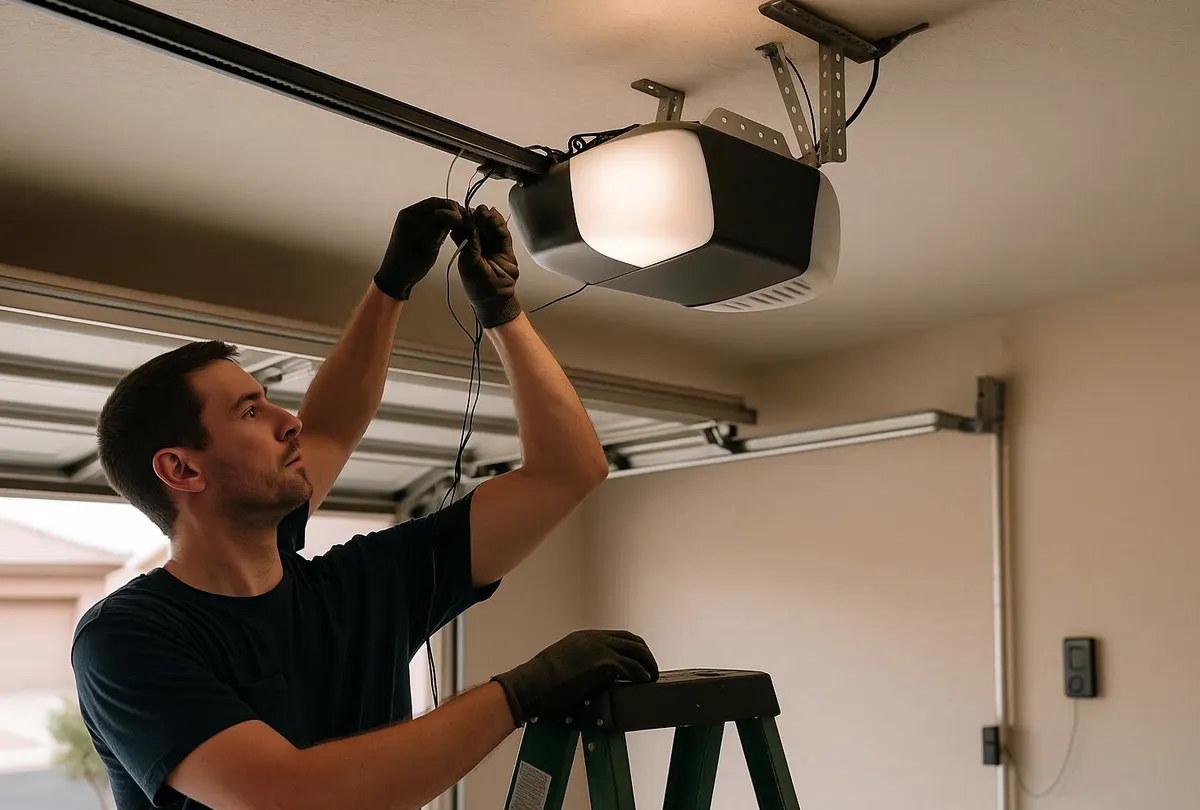
What a Technician Sees on a Storm-Damage Call
The call usually comes in the day after a nor'easter blows through. A homeowner says the garage door was fine the night before, and now one or two panels are bowed inward, the bottom section has popped out of the track, or the whole door is sitting crooked in the opening. On closer look, it's almost always the same story: an older door, original to the house, with no reinforcement struts, worn rollers, and hinges that have been flexing a little more every year. The wind didn't do anything unusual — it just finally found the weak point.
Why the Garage Door Is a Home's Weakest Wall
A garage door is the largest moving opening in most houses, and unlike a wall, it isn't a solid, continuous structure. It's a series of hinged panels held in place by tracks, rollers, and a spring system that's balanced for lifting weight — not for resisting sideways pressure. When high wind hits the front of a house, pressure builds up outside and tries to push the door inward. If wind also gets into the garage through a gap or a failed seal, pressure can build up inside the garage too, pushing outward on the same panels from the other direction. Either way, the door is absorbing a load it usually wasn't engineered for, especially if it's decades old.
This matters more here than in a lot of places. Chester County gets real nor'easters, sustained wind events, and the kind of gusty fall storms that roll through ahead of an early winter cold snap. Add in a lot of original garage doors on older homes in West Chester, Downingtown, and the surrounding area — doors installed well before reinforced panels and wind struts were standard — and you've got a lot of garages that are more vulnerable than the owners realize.
Signs Your Door Is More Exposed Than You'd Like
- No visible horizontal struts on the inside of the panels — these are the metal reinforcement bars that stiffen the door against wind load.
- Track brackets that look loose or slightly pulled away from the wall, even by a quarter inch.
- Weatherstripping that's cracked, flattened, or missing along the bottom and sides, letting wind-driven rain and air pressure into the garage itself.
- A door that shudders or visibly flexes when a gust hits it, or rattles noticeably in storms.
- An opener with no battery backup, which matters if a storm knocks out power and you need to get the car out or secure the door manually.
Getting Ready Before the Next Storm Rolls Through
Reinforce the panels
If your door doesn't have horizontal struts, retrofit kits can be installed on most sectional doors to add rigidity without replacing the whole door. For doors that are old, thin, or already showing stress cracks, replacement with a door rated for higher wind pressure is usually the more durable fix — and it solves the insulation and curb-appeal issue at the same time.
Check the track and hardware
Loose bolts, worn rollers, and bent track sections all reduce how much sideways force the door can handle before it jumps the track. This is a quick thing to tighten and lubricate now, before freeze-thaw cycles start working the metal and salt gets tracked in on tires.
Seal the gaps
Fresh weatherstripping on the bottom seal and side jambs does double duty: it keeps wind-driven rain out during fall storms and keeps cold air and road salt spray out once winter sets in. On older garages, this is often the single most neglected maintenance item.
Service the springs
A door under wind stress puts extra strain on an already-weak spring. If a spring is near the end of its life, a storm can be the thing that finally snaps it — usually at the worst possible time, like mid-storm when you're trying to get the door down.
Add backup power to the opener
A battery backup means you're not stuck manually wrestling a heavy door closed during a power outage, which is common during nor'easters in this area.
When to Call West Chester Garage Door Pro
If your door is older, shows any of the warning signs above, or you just want it checked before the season's first big storm, that's the right time to call. A technician can do a full Garage Door Maintenance & Tune-Up — tightening hardware, checking spring tension, replacing worn weatherstripping — and flag anything that needs more than routine service. If the door is already damaged, bowed, or off-track, that's an Emergency Garage Door Service call, not a wait-and-see situation, since a compromised door can fail completely in the next wind event.
Give West Chester Garage Door Pro a call before the next storm system moves through Chester County. We'll check your door, spot the weak points, and get it storm-ready — whether that's a quick tune-up or a full replacement.